 Solitaire
Accordion Solitaire at a glance
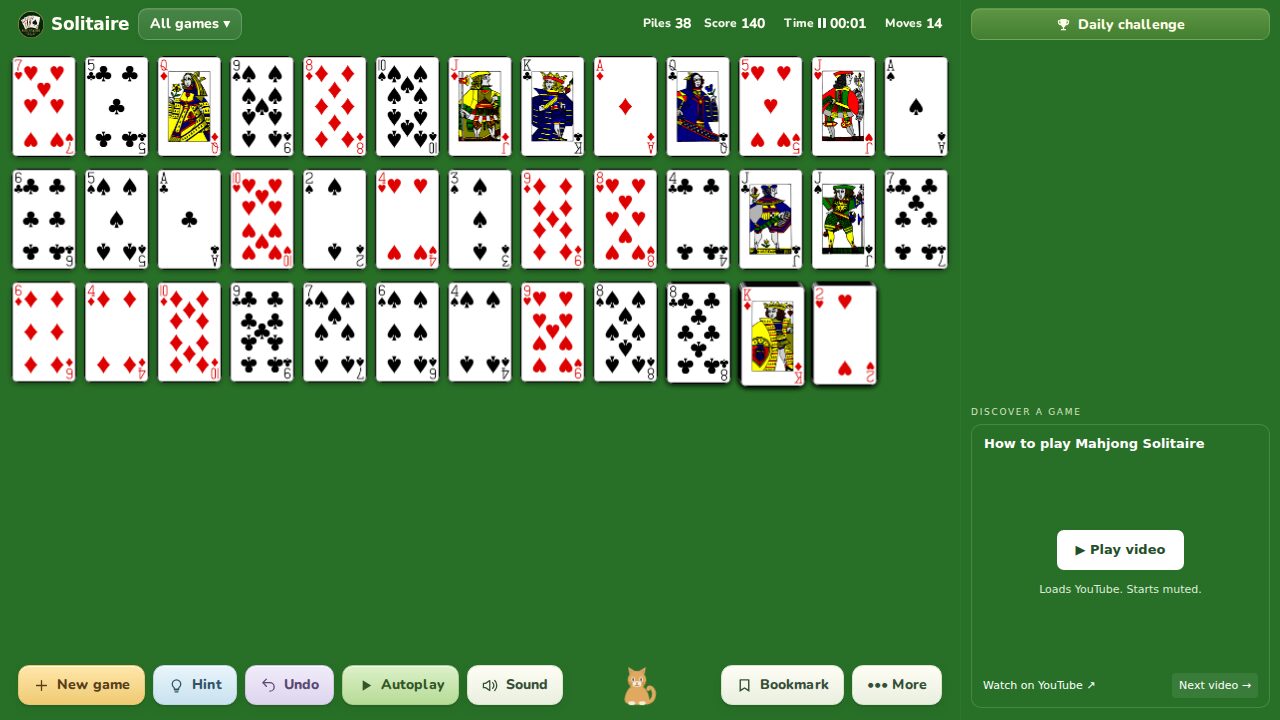
Squeeze a whole deck into one pile. Every card is dealt face up in a single long line.
Accordion is a long-range puzzle. Each move changes which piles sit one and three places apart, so a match you skip now may still be there later, while a hasty move can strand a card with no partner. Expect to lose most deals: one full pile is rare, so many players count five piles or fewer as a win.
Rules and objective
- All 52 cards are dealt face up in one line that wraps across the table, read left to right like a page of text.
- Move a pile onto the pile directly to its left, or onto the pile three places to its left, when their top cards share a suit or a rank.
- The whole pile moves together, and only its top card counts. The line closes up after each move, so new neighbors appear.
- Moves are optional, and there is no stock or redeal. Drag a pile, or tap it; when both destinations are legal, tap the one you want.
- Gather all 52 cards into a single pile to win. Ending with five or fewer piles is a good result.
The table enforces legal moves and saves the current deal in this browser. Hints identify a move that is available now; they do not guarantee that the deal can still be won.
Strategy: how to play better
First priority
Look two or three moves ahead. A three-place jump often lines up a new match that a one-place move would break.
Keep matches in reserve
Moves are optional. A pair you leave alone may still be there later, and some piles are worth keeping as partners for a card further along the line.
Watch the far end
Piles near the end of the line have fewer neighbors to their right, so they get fewer chances to move. Clear them while a match is available.
Frequently asked questions
Can I move a pile two places to the left?
No. A pile can move only onto its immediate left neighbor or onto the pile three places to its left, and only when the two top cards share a suit or rank.
How often can Accordion be won?
Rarely. Getting every card into one pile is estimated at about one deal in a hundred for typical play, which is why the hint looks several moves ahead before suggesting one.