 Solitaire
How to Play TriPeaks Solitaire: Rules, Wrapping and Streaks
TriPeaks is the fastest game on this site. One rule, three peaks, and a scoring system that pays you far more for one long chain than for the same cards taken in dribs and drabs.
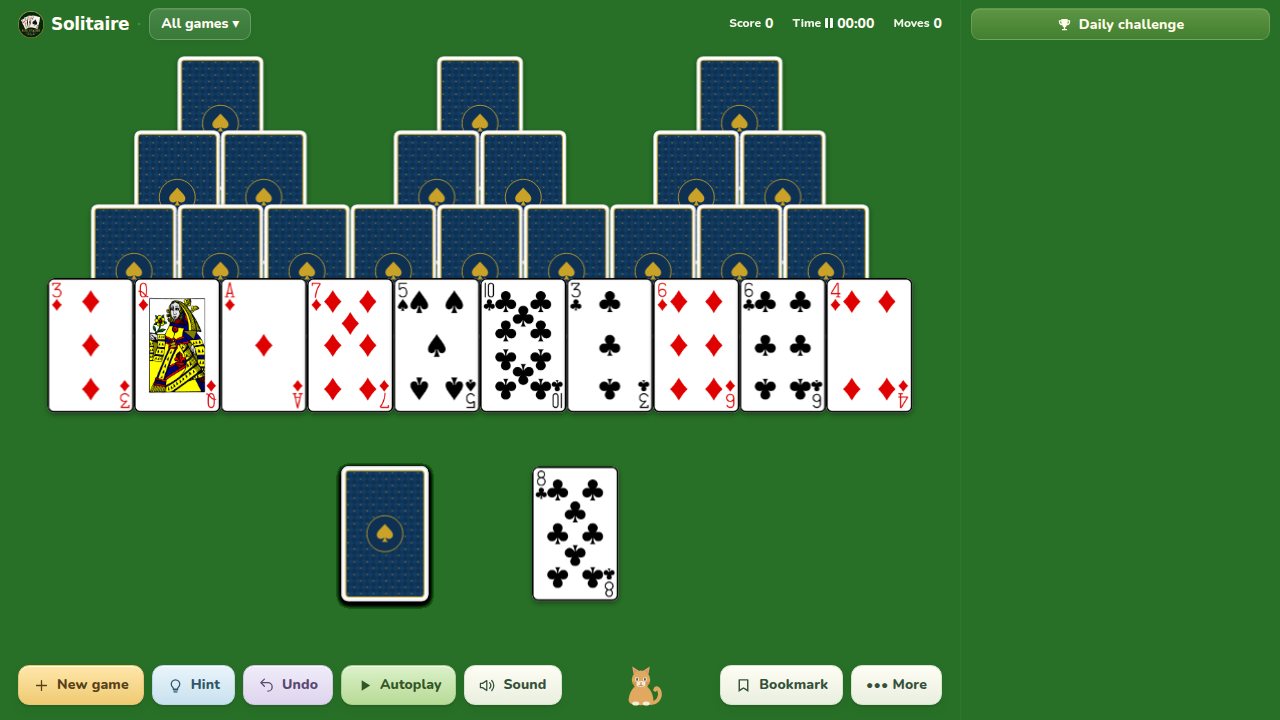
Watch the video guide
The board, explained
Twenty-eight cards form three overlapping peaks, and the rest of the deck waits underneath.
| Area | What it holds |
|---|---|
| The peaks | 28 cards in three pyramids. The ten cards along the bottom row start face up; the eighteen above them are face down until the cards covering them are gone. |
| Waste | One card face up at the start. This is your target, and it changes every time you play. |
| Stock | 23 cards. Click for a new waste card when nothing on the board fits. |
The only rule you need
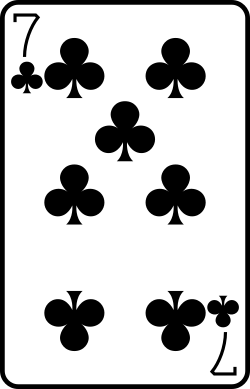
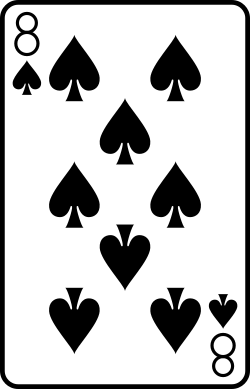
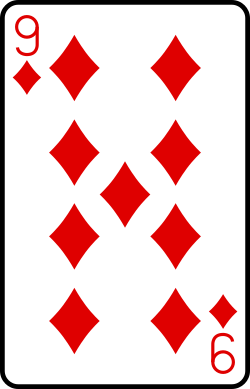
Play any uncovered board card that is one rank above or one rank below the top of the waste. That is the entire game. Suit never matters, colour never matters, and there is nothing to build.
Why the Ace wraps to the King
In TriPeaks the ranks form a loop. King goes on Ace, Ace goes on King, and a chain can run all the way round without ever hitting a dead end.
This is the single mechanical difference between TriPeaks and Golf, and it changes the game completely. In Golf a King is a wall, because only a Queen can follow it. In TriPeaks a King is just another link.
How the streak bonus works
Points come from consecutive cards, not from cards. Every card you take without touching the stock is worth ten more than the one before it.
| Cards in the chain | Points for that card | Running total |
|---|---|---|
| 1st | 10 | 10 |
| 2nd | 20 | 30 |
| 3rd | 30 | 60 |
| 5th | 50 | 150 |
| 8th | 80 | 360 |
Eight cards taken as one chain are worth 360. The same eight cards taken with a stock draw between each pair are worth 80. Drawing from the stock resets the streak to zero, so the decision to draw is the most expensive one in the game.
Planning a chain before you start it
- Trace the whole chain first. Before you take a card, follow the sequence as far as you can see it. A chain that runs six cards and then dies is often worse than a shorter one that ends on a rank with several copies still available.
- Open the peaks, not the bottom row. The ten bottom-row cards are already face up. Cards that uncover a face-down card higher in a peak are the ones that keep the game alive.
- Finish on a flexible rank. Ending a chain on a rank where you can see several neighbouring cards means your next draw is more likely to restart a chain rather than start a new one from nothing.
- Count what is left in the stock. Twenty-three draws is not many, and each unused one is fifteen points at the end.
Three mistakes that cost peaks
Taking the first legal card you see
There are often two or three legal cards. The right one is the one that leads somewhere, not the one nearest your cursor.
Drawing to break a small deadlock
A draw resets your streak and burns one of only 23 cards. Check every uncovered card on all three peaks before you reach for the stock.
Clearing one peak completely
Peaks are worth clearing evenly. Pouring every move into one peak leaves the other two fully stacked with a shrinking stock to solve them.
Frequently asked questions
What is the rule in TriPeaks?
Take any uncovered board card that is one rank above or one rank below the card on top of the waste. Suits are irrelevant. The card you take becomes the new waste card, so the target changes with every move.
Does the Ace wrap to the King in TriPeaks?
Yes, and this is the difference between TriPeaks and Golf. An Ace can be played on a King and a King on an Ace, so the ranks form a loop with no dead ends. It is why TriPeaks chains run so much longer than Golf chains.
How does the streak bonus work?
Each card you take without drawing from the stock is worth more than the last: the first is 10 points, the second 20, the third 30 and so on. Drawing a new card resets the streak to zero, which is why one nine-card chain is worth far more than nine separate cards.
Do I need to empty the stock to win?
No. The game is won as soon as all three peaks are clear. Cards still sitting in the stock are worth fifteen points each in the win bonus, so finishing early is worth real points.