 Solitaire
How to Play Russian Solitaire: Rules, Strategy and Why It Is So Hard
Russian Solitaire deals every card at the start, gives you no stock to fall back on, and insists that a card may only land on the next card up in its own suit. It is one of the hardest solitaires in common play, and one of the most rewarding, because nothing is hidden from you except the cards you have not dug out yet.
Watch the video guide
The board, explained
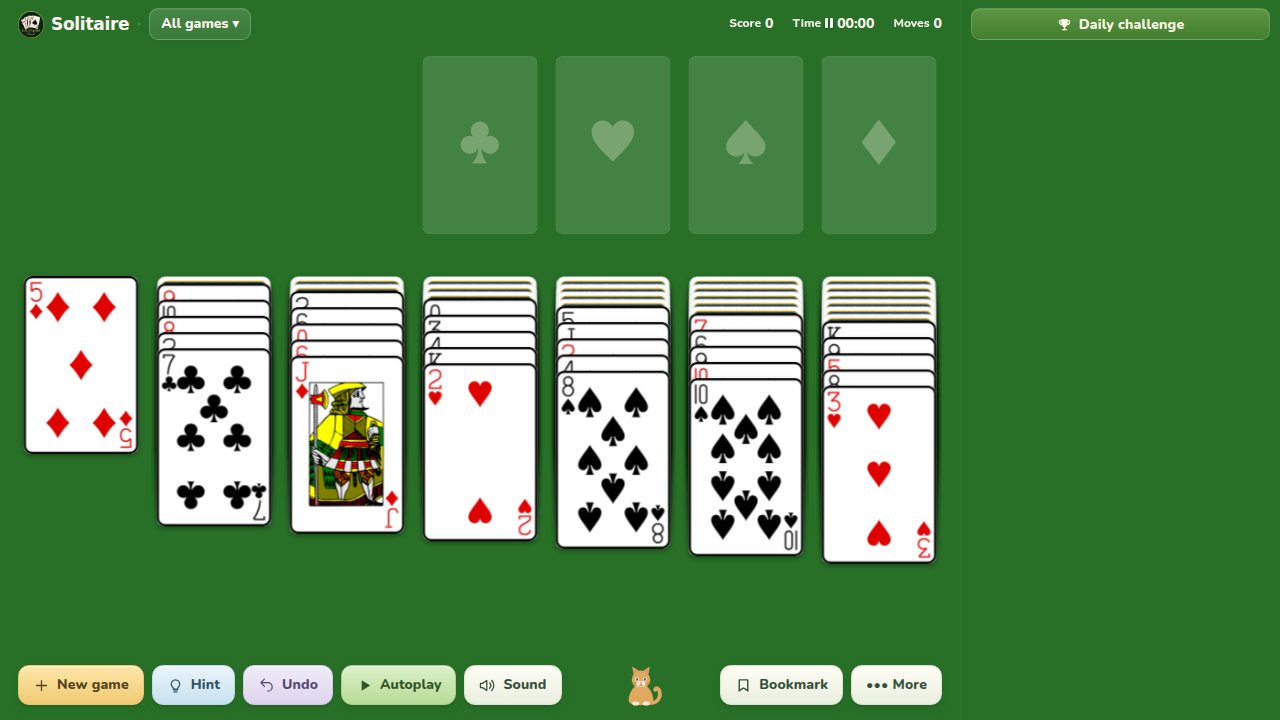
Russian Solitaire has fewer moving parts than almost any other solitaire. There is no stock, no waste and nothing to click for new cards. Everything you will ever have is already on the table.
| Area | Where it is | What it holds |
|---|---|---|
| Tableau | Seven columns filling the table | All 52 cards. The first column holds a single face-up card; every column after it holds a block of face-down cards topped by five face-up ones. |
| Foundations | Four spaces along the top | Empty at the start. Ace to King in one suit each, and in this version cards sent here never come back. |
| Stock | Nowhere | There isn’t one. No draws, no redeals, no rescue. |
The deal leaves 21 cards face down and 31 face up. The seventh column is the worst of them, with six cards hidden under five visible ones. Those 21 hidden cards are the entire difficulty of the game. Everything else is in front of you from the first second.
How you win
Build all four foundations from Ace up to King, one suit each. All 52 cards home and the deal is won. That is the same goal as Klondike, and it is the only thing the two games have in common once you start playing.
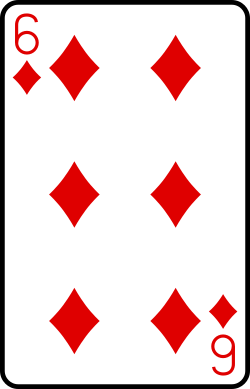
The three legal moves
1. Build down the tableau, in suit
A card may land on a face-up tableau card that is one rank higher and of the same suit. The 7 of spades goes on the 8 of spades. It does not go on the 8 of clubs, and it certainly does not go on either red 8. There is exactly one card in the whole deck that will accept it.
2. Move any face-up card, with everything on top of it
This is the rule that makes the game playable at all. Grab any face-up card anywhere in a column and the entire stack above it travels with it, in whatever order it happens to be in. The cards riding along do not have to form a sequence. They do not have to match each other. They do not have to match anything. Only the card you grabbed needs to be legal on its destination.
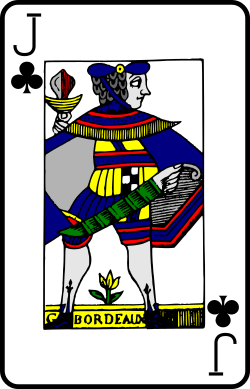
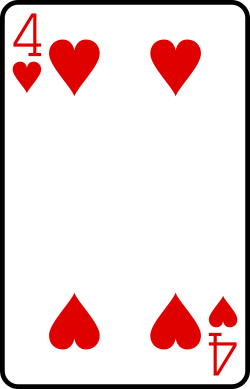
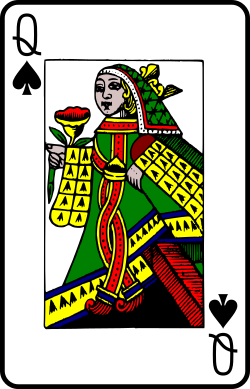
3. Send cards up to the foundations
Aces start the foundations, then the 2 of that suit, and so on up to the King. Only the top card of a column can go up, and only one at a time.
An empty column accepts only a King, or a group with a King at the bottom. And a card sent to a foundation in this version cannot be brought back down. Both mistakes are permanent, and both are easy to make in the first five minutes.
Why same-suit changes everything
In Klondike or Yukon, a black 7 has two possible homes: either red 8. In Russian Solitaire the 7 of spades has one home, the 8 of spades, and there is only one of those in the deck. If that 8 is buried face down in column six, the 7 has nowhere to go until you dig it out.
| Klondike / Yukon | Russian Solitaire | |
|---|---|---|
| Tableau builds | Down, alternating colours | Down, same suit |
| Landing spots per card | Two | One |
| Stock | Klondike has one, Yukon does not | None |
| Group moves | Ordered runs in Klondike, any group in Yukon | Any group at all |
| Typical outcome | Winnable more often than not | Most deals are lost |
The compensation is move two. Because a group carries everything above it, one legal landing spot can absorb an enormous pile of junk in a single move. So the real currency in Russian Solitaire is not tidy sequences, and it is not empty columns. It is live landing spots: pairs of same-suit neighbours where one is exposed on the board and the other is sitting on top of something you want to shift.
Before every move, look at the seven cards currently at the bottom of each column and ask which same-suit card would sit on each of them. Those seven cards are your entire set of options. If none of them has a partner available, you are one move from stuck, and it is time to undo rather than shuffle things around.
Your first game, step by step
- Read the whole board first. Thirty-one cards are face up. That is nearly two thirds of the deck visible before you touch anything, and it is the closest Russian Solitaire ever comes to being generous.
- Find your same-suit pairs. Scan the seven exposed column bottoms and look for a card whose same-suit junior is sitting somewhere you would like to empty. Those are your moves, and there are usually fewer of them than you expect.
- Prefer the move that flips a card. A move that exposes a face-down card is worth more than a move that tidies the board, because a face-down card is the only new information this game will ever hand you.
- Dig into the long columns. Columns six and seven hide five and six cards. Clearing a card off column two, which hides one, does far less for you.
- Hold the middle ranks back. Send Aces and 2s up freely. Think hard about anything from about a 5 upwards, because it cannot come back down and it may be the only landing spot for the card directly below it.
- Watch for the auto-complete button. Once every card is face up and every column runs in descending order, the game knows the deal is decided and offers to play it out for you.
Five mistakes that lose the deal
Sending a middle card to a foundation too early
This is the big one, and it is worse here than in Klondike because foundation cards do not come back. Send the 6 of hearts home and the 5 of hearts has lost its only landing spot for the rest of the game.
Burying a card’s only parent
Every card has exactly one card it can sit on. Drop a big group onto the 8 of spades and you have not simply made a move, you have closed the only door the 7 of spades had. Check what you are covering, every time.
Emptying a column with no King in reach
There is no stock, so a King will not arrive later. If none of your face-up cards is a King and none of the hidden ones is about to be, an empty column is simply a seventh of the table you can no longer use.
Moving a group because it is legal
Legal and useful are different things. If a move exposes nothing, unblocks nothing and creates no new pairing, all it has done is bury whatever it landed on. In a game with one landing spot per card, that is rarely free.
Playing on without undoing
Most Russian deals are lost, and a great many of them are lost at a single identifiable move. Undo is not a cheat here, it is how you find out which branch was survivable. Back up to the fork and try the other road.
Russian Solitaire vs Yukon
The two games share a file in this site’s code, because mechanically they are the same game with one setting changed. The deal is identical, the movement rule is identical, the King rule is identical. Yukon builds down in alternating colours; Russian builds down in suit.
If Russian Solitaire is beating you, play a few hands of Yukon first. The excavation habit transfers directly, and it is much easier to learn the rhythm of moving big unordered groups while every card still has two places it can go.
Frequently asked questions
What is the difference between Russian Solitaire and Yukon?
The deal and the movement rule are identical. The only change is what the tableau builds on: Yukon accepts the next card up in either opposite colour, Russian accepts only the next card up in the same suit. That one word removes half of every card’s possible landing spots and turns a moderate game into a very hard one.
Can I move a group of cards that is not in order?
Yes, and this is the signature rule of the game. Pick up any face-up card and every card sitting on top of it comes along, in whatever jumbled state it is in. Only the card you grabbed has to be legal on the card you drop it onto. The cards riding along do not have to match each other or anything else.
What can go on an empty column in Russian Solitaire?
Only a King, or a group whose bottom card is a King. Everything else is refused. Because there is no stock to deal fresh cards from, an empty column with no King available is dead space for the rest of the game.
Can I take a card back off a foundation?
Not here. In this version a card sent to a foundation stays there permanently, which makes premature foundation plays genuinely costly. A 6 you send home cannot come back to catch the 5 that turns up two moves later, so keep middle cards on the board until the suit below them is clear.
How often can Russian Solitaire be won?
Rarely. It sits at the difficult end of the solitaire family alongside Forty Thieves, and winning roughly one deal in ten is a respectable rate for a good player. Unlimited undo is less a convenience here than a way to explore the branch you did not take.