 Solitaire
Why We Still Play Alone
The modern games industry runs on other people. Solitaire quietly refuses, and stays enormous anyway. What is it actually giving players?
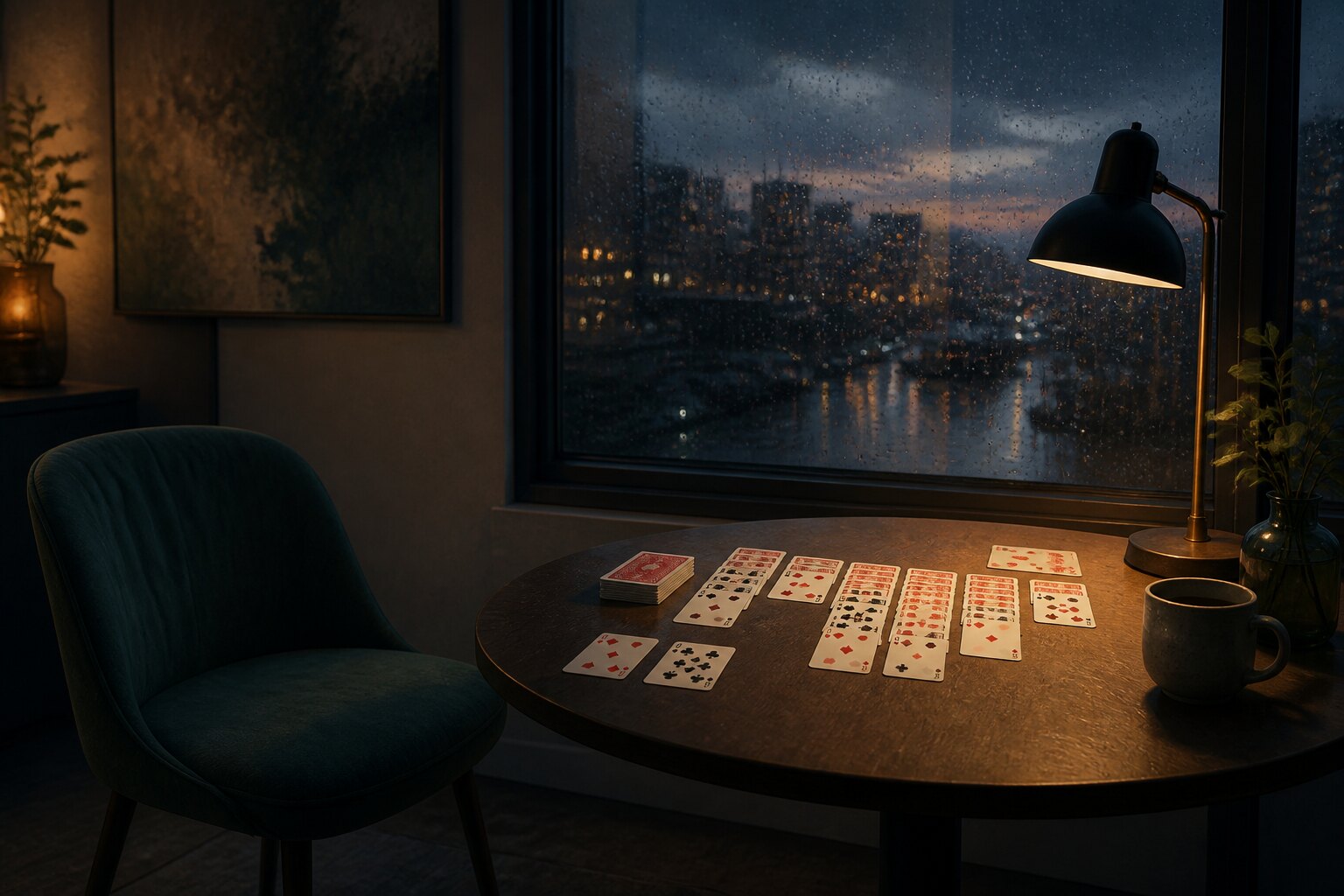
The shape of the thing
Consider what a game of solitaire is, structurally, compared with almost anything else you could open on the same device.
It takes between two and eight minutes. It begins instantly, with no loading, no menu tree and no account. It has exactly one participant, so there is no waiting and no social cost to leaving. It cannot be lost in a way that damages anything. And it is over cleanly — a win or a dead deal, then nothing, with no thread left dangling into your afternoon.
Almost every commercially successful game of the past two decades has been engineered to violate the last of those. Streaks, dailies, energy timers, seasons, guilds waiting on your contribution: the industry's central innovation has been the deliberate dangling thread. Solitaire has none of it, and its usage numbers have not noticed.
Difficulty that meets you where you are
The most-cited framework here is Mihaly Csikszentmihalyi's work on flow: the state people report when a task's difficulty sits just above their current skill, feedback is immediate, and goals are unambiguous. Solitaire hits the last two exactly. Every move is instantly legal or illegal, and the goal never needs explaining.
The first condition — difficulty matched to skill — it achieves by accident, and this is the genuinely unusual part. There is no difficulty curve because there is no designer setting one. The deal sets it, freshly, every time. Some hands are trivial, some are impossible, most sit somewhere in between, and the distribution is wide enough that a beginner and a veteran both find hands at the edge of their ability without either of them configuring anything.
| Design problem | How modern games solve it | How solitaire solves it |
|---|---|---|
| Matching difficulty to skill | Tuned curves, adaptive difficulty, matchmaking | Random deals across a wide difficulty spread |
| Giving feedback | Particles, sound, progression bars | The move is legal or it is not |
| Getting players to return | Streaks, rewards, notifications | Nothing. They return anyway |
| Session length | Designed around monetisation | However long the deal takes |
The pull of the unfinished
There is a well-known idea in psychology, usually traced to Bluma Zeigarnik's work in the 1920s, that incomplete tasks stay active in memory in a way completed ones do not. The original studies were about waiters remembering unpaid orders; the effect has been replicated unevenly since, and it is more contested than popular writing suggests.
But whatever its exact status, the intuition matches what solitaire players describe. A board with four cards left to place is very difficult to walk away from. A board you have just completed is very easy to walk away from. That asymmetry — strong pull while unfinished, clean release on completion — is the whole loop, and it is produced by the rules rather than by a retention team.
A game that asks for nothing
The plainest explanation may also be the correct one. Solitaire is one of the last widely played games that makes no claim on you.
It does not want your email address. It does not care whether you played yesterday. It will not tell anyone you stopped. Nobody is waiting for your turn, nobody sees your score, and there is no version of you inside it accumulating anything you would be sad to lose.
For a specific and very large set of moments — the ten minutes before a meeting, the wait at a clinic, the hour after a hard day when you want your hands busy and your head quiet — that combination is not a weak offering. It is the exact offering, and almost nothing else provides it.
What we do not know
It is worth being straight about the limits here, because this subject attracts more confident claims than it can support.
There is no strong body of evidence that playing solitaire improves memory, delays cognitive decline, or trains transferable skills. Claims of that kind circulate widely and are not well supported. The research on flow and on incomplete tasks is real but general — it was not conducted on card games, and applying it here is interpretation, not measurement.
What can be said with confidence is narrower and, we think, enough: a very large number of people, given free access to every form of entertainment ever created, keep choosing a four-minute card game they cannot win most of the time. Whatever that is, it has survived every technology shift since the pasteboard card, and it does not appear to be going anywhere.
Want the full rules? Read Solitaire Win Rates Explained.
Frequently asked questions
Why is solitaire so addictive?
Addictive is probably the wrong word for most players. Solitaire has several features that make it easy to start and easy to repeat: very short sessions, immediate feedback, a difficulty level set by the deal rather than by a designer, and no cost to abandoning a game. That combination makes it a comfortable default rather than a compulsion.
Is playing solitaire good for your brain?
The honest answer is that the evidence for card games specifically improving cognition is thin. What solitaire reliably provides is a low-stakes task that occupies attention without demanding much of it, which many players use for exactly that.
Why do people prefer single-player card games?
No scheduling, no waiting, no obligation to anyone else, and no consequence for stopping mid-hand. For a game meant to fill small gaps in a day, every one of those is a feature.
Keep reading
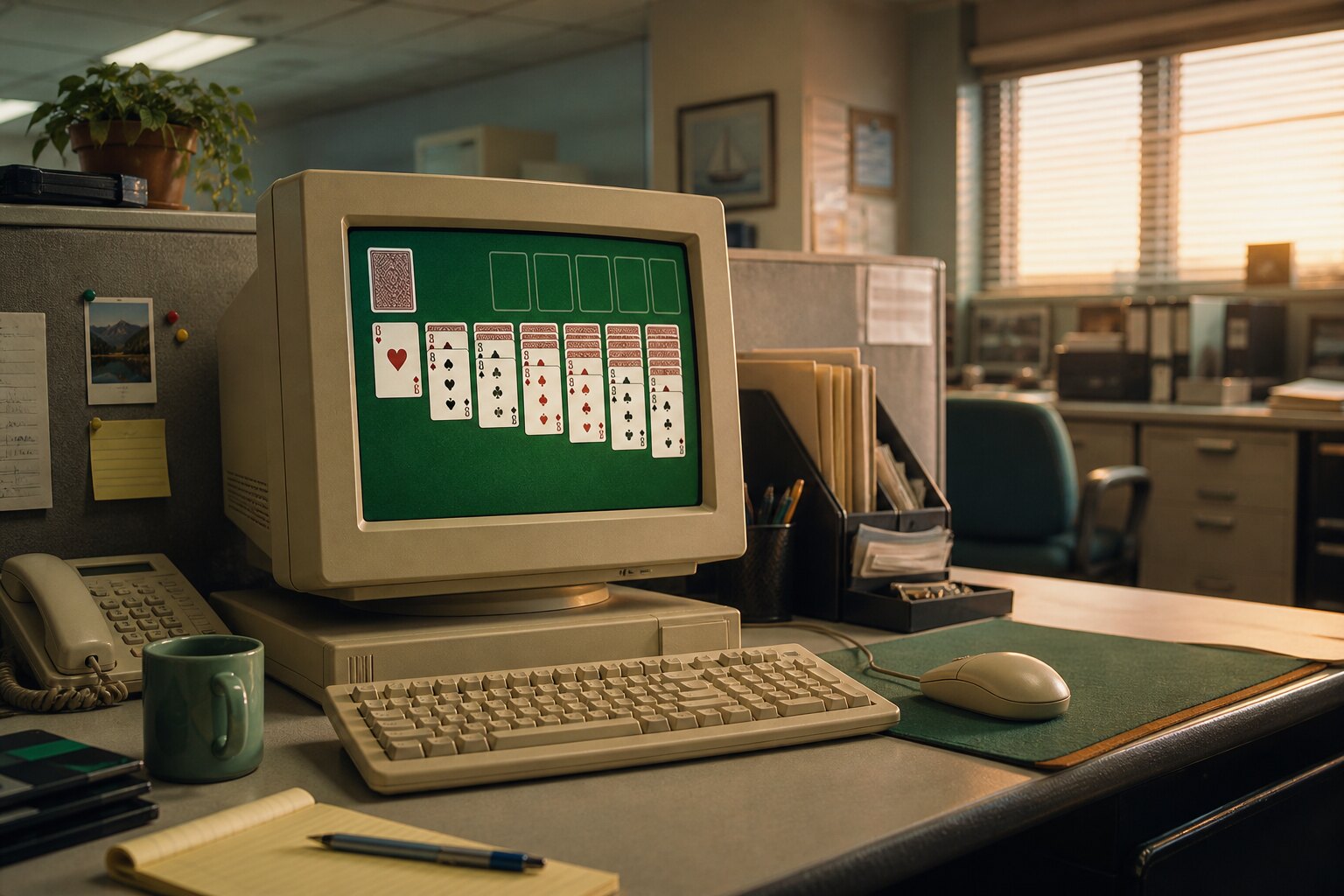
How Solitaire Conquered the Office
It was never meant to be a game. It was a mouse tutorial with a green baize disguise — and it ended up on more desks than any piece of software ever written.
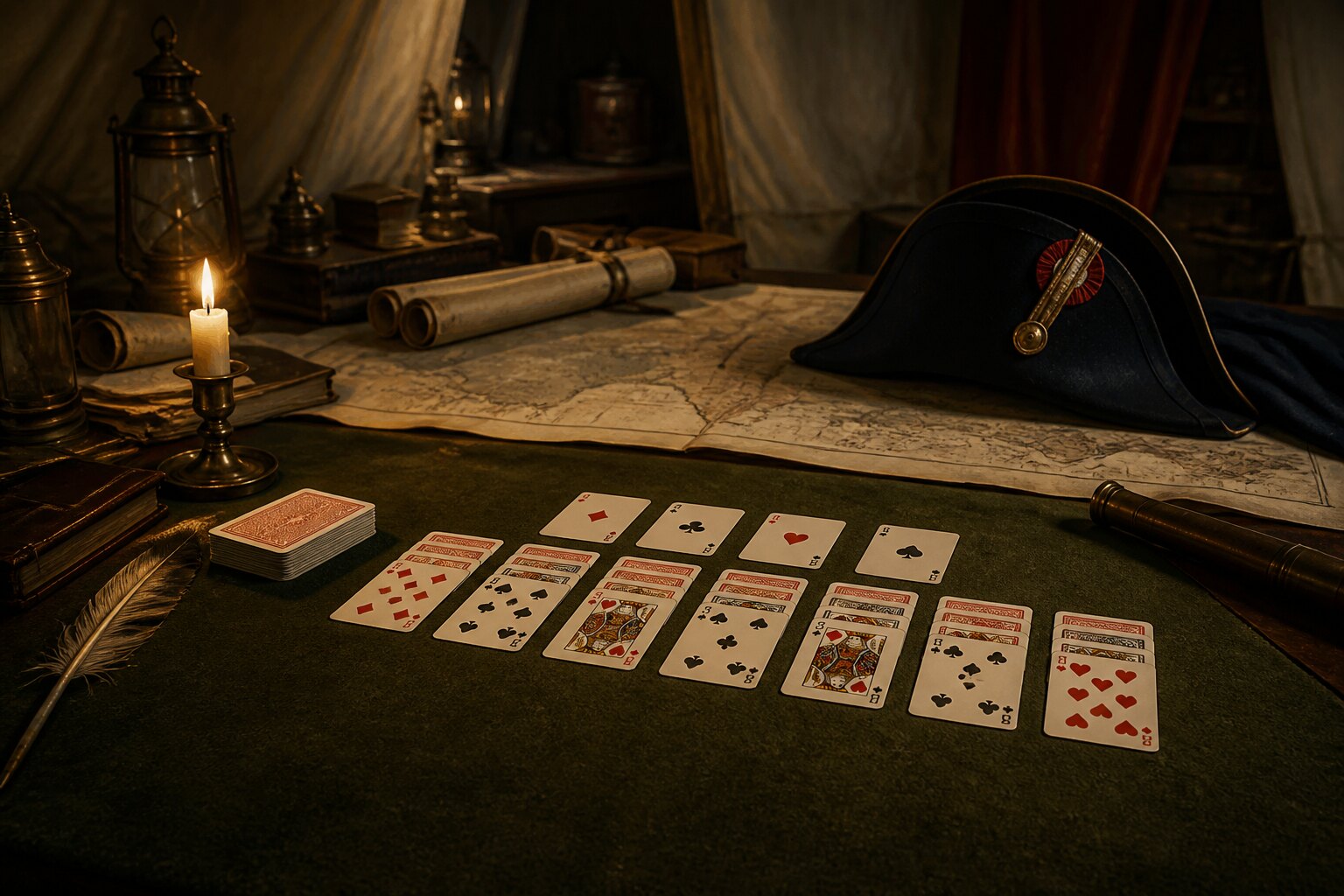
Napoleon Did Not Invent Solitaire
The story is too good to check: a defeated emperor on a rock in the Atlantic, dealing cards alone. It is also almost certainly wrong — and the truth is stranger.
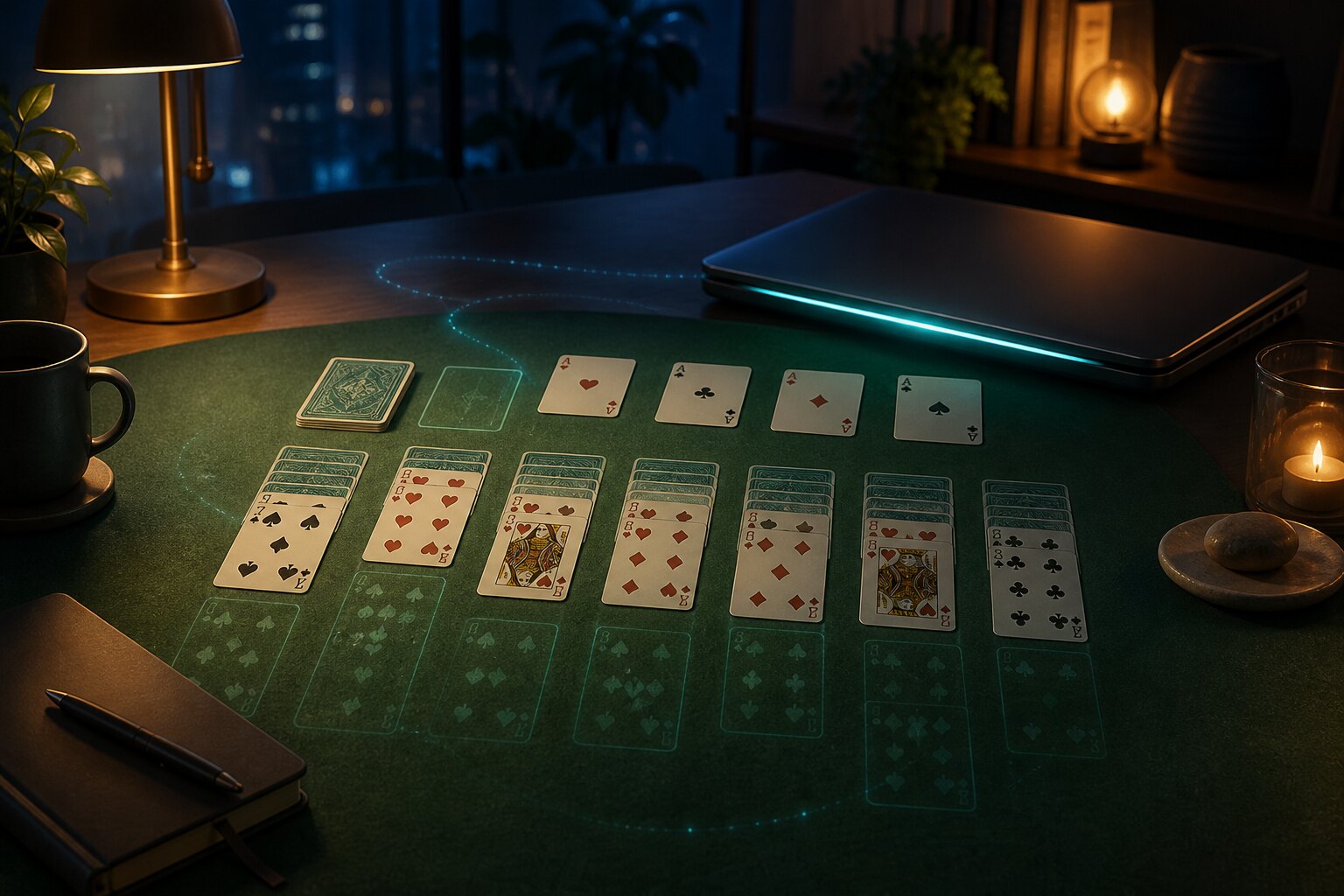
A Game That Remembers Where You Stopped
Close the tab mid-hand and come back tomorrow: the board, the timer, the score and your undo history are all still there. Here is how it works and what it does not do.