 Solitaire
How Solitaire Conquered the Office
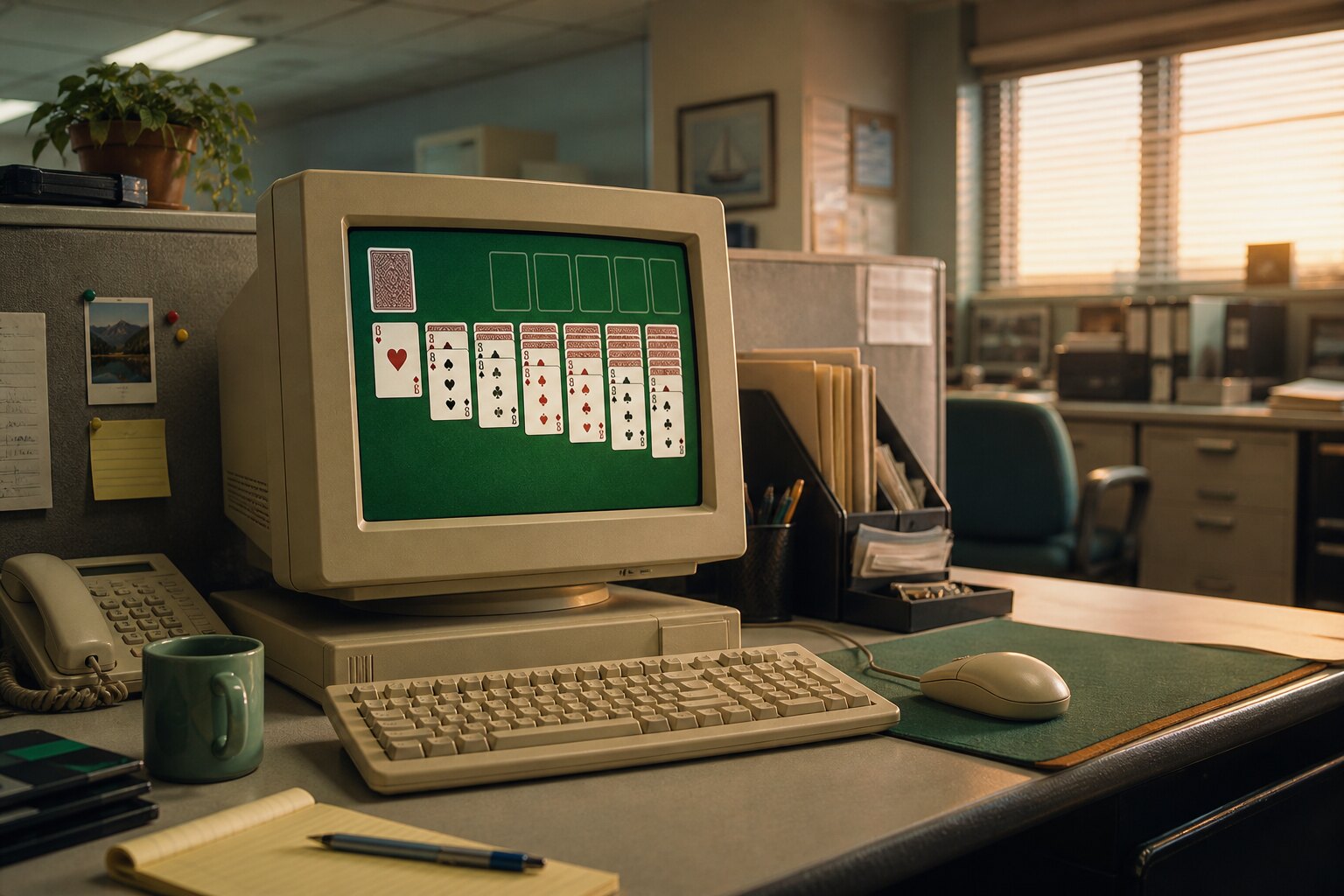
In 1990 Microsoft shipped a card game it had paid nobody to write. Thirty-six years later it is still the most quietly consequential piece of software in the history of the personal computer.
The intern who was not paid
The most-played computer game in history was a side project. Wes Cherry was an intern at Microsoft in the late 1980s, working on something else entirely, when he wrote a version of Klondike solitaire for Windows in his own time. It shipped with Windows 3.0 in May 1990, on machines that would go on to sit on tens of millions of desks. He received no royalties. In interviews since, he has been consistently, disarmingly relaxed about this — the game was a lark, and nobody in the building thought it was going to matter.
It is worth pausing on how strange that is. Every element of the modern software industry is organised around identifying the thing that will matter and capturing its value. Solitaire slipped through that net completely. It was, by every internal measure of the time, a rounding error attached to an operating system.
A tutorial wearing a disguise
The reason it was included at all is the detail most people miss, and it is the detail that makes the whole story make sense. In 1990, the average office worker had spent their entire computing life inside a command line. The mouse was not intuitive to them. It was an unfamiliar object that required a set of physical skills nobody had: point accurately, click without moving, press and hold while moving, release at a precise destination.
You cannot teach that with a manual. You can teach it with a game that is impossible to play badly and impossible to lose anything by playing.
Look at what a single Klondike game asks of you. Click a face-down pile to turn a card — that is a simple click. Drag a red seven onto a black eight — press, hold, move, release, with a target you have to hit within a few pixels. Double-click an ace to send it to the foundation — a distinct gesture from a single click, taught by reward rather than instruction. Drag a run of five cards as a unit — the same gesture, now with the confidence that the machine will treat a group as one object.
By the time you have won a game, you have performed every core mouse interaction in the Windows interface several hundred times. Minesweeper, shipped alongside it, did the same job for the distinction between the left and right buttons.
The most-looked-at deck of cards ever drawn
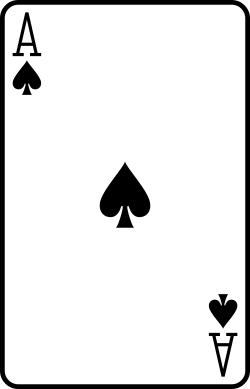
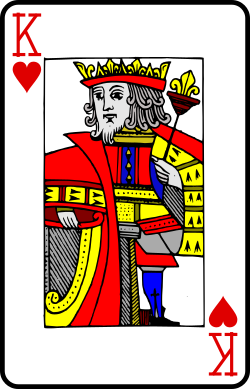
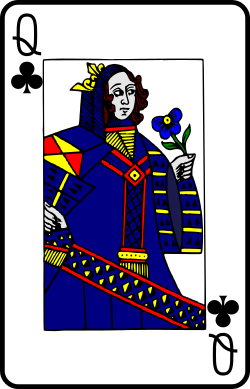
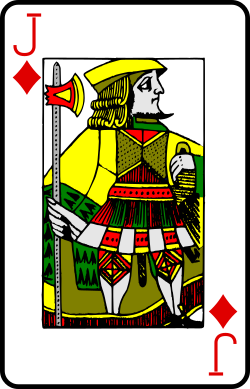
The cards themselves were drawn by Susan Kare, whose icon work had already defined the visual language of the original Macintosh. The constraint she was working under is easy to forget now: those faces had to read clearly at a size of roughly 71 by 96 pixels, in a limited palette, on a CRT monitor of uncertain quality, at a glance, hundreds of times an hour.
The famous card backs — the sunburst, the beach scene, the castle, the robot dog — were not decoration for its own sake. They were the first time a great many people ever chose anything about how their computer looked. A generation learned the idea of software personalisation from a dialog box full of card backs.
The productivity panic
What followed was one of the first genuine moral panics about computers at work. Through the 1990s, IT departments removed Solitaire from corporate images. Managers walked past desks watching for the flash of green. In 2006 a New York City employee was reportedly dismissed after the mayor spotted a game of Solitaire on his screen during an office visit — a story that travelled precisely because everyone recognised the scene.
The panic was aimed at the wrong target, in a way that now looks almost quaint. Solitaire was never the thing stealing the afternoon; it was the thing you could see. It was legible procrastination in an era before the infinite scroll made procrastination invisible.
| Year | Moment |
|---|---|
| 1990 | Solitaire ships with Windows 3.0, bundled as a mouse tutorial. |
| 1992 | Minesweeper and FreeCell arrive; FreeCell is bundled properly from Windows 95. |
| 1995 | Windows 95 puts the games in front of a mass consumer audience. |
| 2012 | Windows 8 ships without Solitaire preinstalled for the first time in 22 years. |
| 2015 | It returns in Windows 10 as the Microsoft Solitaire Collection — now with adverts. |
| 2019 | Microsoft Solitaire is inducted into the World Video Game Hall of Fame. |
What it left behind
The lesson people usually draw is about distribution: put something on every desk and it wins. That is true but incomplete. Plenty of bundled software was on every desk and nobody remembers it.
Solitaire lasted because of what it asks and does not ask. A game takes four minutes. It has no session, no account, no other players waiting on you, no penalty for abandoning it mid-hand. It fits into the shape of a gap in the day — the two minutes while a document renders, the phone call you are on hold for — better than almost anything designed since, with vastly larger budgets, has managed to.
That is the part worth stealing. The game did not need to be compelling. It needed to be available, and to leave nothing behind when you closed it.
Want the full rules? Read A Short History of Solitaire.
Frequently asked questions
Who wrote Windows Solitaire?
Wes Cherry, an intern at Microsoft, wrote the original Windows version in 1988–89 while still at university. It shipped with Windows 3.0 in May 1990. He was not paid royalties for it.
Why did Microsoft include a card game with Windows?
To teach a generation of keyboard users how to operate a mouse. Klondike requires precise clicking, dragging and dropping, and it rewards the player for practising all three — which is exactly what a company shipping its first mainstream graphical interface needed.
Who designed the cards?
Susan Kare, the designer behind much of the original Macintosh iconography, drew the card faces and backs used in the Windows deck.
Keep reading
Napoleon Did Not Invent Solitaire
The story is too good to check: a defeated emperor on a rock in the Atlantic, dealing cards alone. It is also almost certainly wrong — and the truth is stranger.
The FreeCell Deal Nobody Could Solve
Thirty-two thousand numbered deals. A volunteer army with dial-up modems. One layout that refused to fall — and it is still refusing.
Why We Still Play Alone
No opponent, no lobby, no season pass. Every trend in games for thirty years has pointed away from solitaire, and it has not moved an inch.