 Solitaire
The FreeCell Deal Nobody Could Solve
Before crowdsourcing had a name, a few thousand people with modems set out to solve every deal in a bundled Windows card game. They got to 31,999.
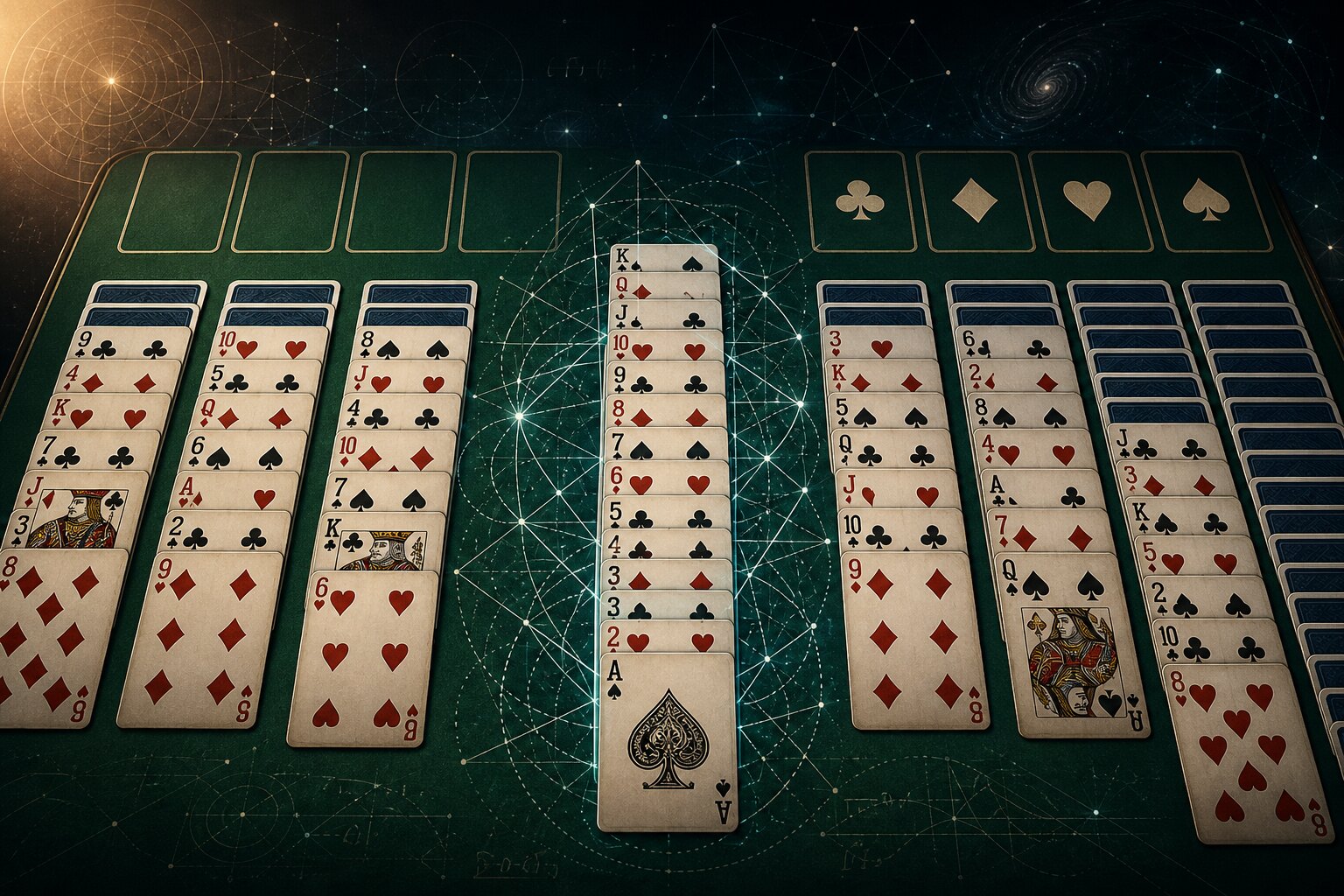
The Internet FreeCell Project
Microsoft's FreeCell did something unusual for a bundled game: it numbered its deals. Type a number between 1 and 32,000 and you got a specific, reproducible layout. That single design decision turned a card game into a shared object. Two people on opposite sides of the world could argue about the same hand.
In 1994, Dave Ring started what became known as the Internet FreeCell Project: a distributed, volunteer effort to determine whether every one of those 32,000 deals could actually be won. Participants claimed blocks of one hundred deals over email and newsgroups, played them by hand, and reported back. There was no funding, no institution and no software doing the work — just several hundred people, playing cards, keeping records.
Within about a year the map was almost complete. Every block came back solved except for one deal, in one block, that nobody could finish.
What is wrong with 11982
Human failure is not proof. What settled it was exhaustive search: with only four free cells, eight columns and 52 cards, the reachable state space of a FreeCell deal is large but finite, and a computer can walk all of it. When that was done for 11982, the answer came back clean. There is no winning line. Not a difficult one, not a long one — none.
The reason, in plain terms, is a lack of slack. FreeCell gives you four free cells and whatever empty columns you can manufacture, and almost every deal contains enough short-term storage to unpick its own knots. Deal 11982 is arranged so that the cards you must relocate to make progress always outnumber the spaces available to hold them, at every point in the game. Every promising line runs out of parking.
| FreeCell fact | Number |
|---|---|
| Deals in the original Microsoft set | 32,000 |
| Solvable | 31,999 |
| Unsolvable | 1 — game #11982 |
| Free cells available | 4 |
| Cards face down at deal | 0 |
Why FreeCell is nearly always winnable
The zero in that last row is the whole story. FreeCell deals every card face up. There is no hidden information, which means there is no luck in the ordinary sense — the deal is fixed, you can see all of it, and the only variable is whether you find the line.
Add four free cells and the capacity to move sequences as units, and the game becomes extraordinarily forgiving of tangles. The supermove formula makes this concrete: the number of cards you can shift at once is (1 + free cells) × 2empty columns. One empty column doubles your reach. Two quadruple it. That exponential is why almost every FreeCell knot can, with enough care, be untied.
What came after
Later work extended the numbering far beyond 32,000 and threw solvers at millions of deals. The picture held: unsolvable FreeCell layouts exist, but they are vanishingly rare — well under one in a thousand for standard four-cell FreeCell. Deal 11982 was not a fluke of the search; it was a genuinely uncommon object that happened to land inside the one range of deals the whole world was looking at.
The project itself is worth remembering separately from its result. It is one of the earliest examples of the pattern that now runs an enormous amount of the internet: split a large problem into small units, hand them to strangers who are interested for their own reasons, aggregate what comes back. Nobody was paid. The infrastructure was a mailing list.
The useful lesson for your own play
Knowing that essentially every deal is winnable changes how you should treat a loss. In Klondike, losing is usually the deal's fault. In FreeCell, it is almost always yours — and that is good news, because it means the losses are information.
Three habits follow directly from it:
Never fill all four cells without a plan to empty them. A full set of cells is not storage, it is paralysis. Every card you park should have a named destination.
Value an empty column above almost anything. The exponent in the supermove formula sits on empty columns, not free cells. Emptying a column is usually worth several moves of setup.
Use undo as a search tool. Since the deal is solvable, backing up and trying a different branch is not cheating — it is the same thing the volunteers were doing by hand in 1994, and it is how you learn to see the line the first time.
Sources and scope
Michael Keller participated in the original deal-solving project. His FreeCell FAQ documents the 32,000-deal result and subsequent computer checks. The exception is #11982 within that collection; larger collections contain additional unsolvable deals. Microsoft deal numbers require Microsoft's dealing algorithm and should not be assumed to match another game's seeds.
Source checked September 8, 2026. See our guide to solver odds and player win rates and editorial standards.
Want the full rules? Read How to Play FreeCell.
Frequently asked questions
Is FreeCell game 11982 really unsolvable?
Yes. It has been verified by exhaustive computer search: no sequence of legal moves from that layout reaches a completed board. It is the only unsolvable deal among the original 32,000 Microsoft deals.
What percentage of FreeCell deals can be won?
Essentially all of them. Of the original 32,000 numbered deals, 31,999 are solvable. On randomly generated deals more broadly, the solvable proportion is above 99.9%, which is why FreeCell is usually described as a game of skill rather than luck.
Does that mean I should win every FreeCell game?
It means every game you lose was winnable, which is a very different feeling from Klondike. Solvable does not mean easy — some deals require long sequences with no margin for error.
Keep reading

The Case for Draw 3
Draw 1 is the mode most people play and the one that teaches you least. Draw 3 turns the stock from a slot machine into a resource you have to manage.
Four-Suit Spider Is Winnable
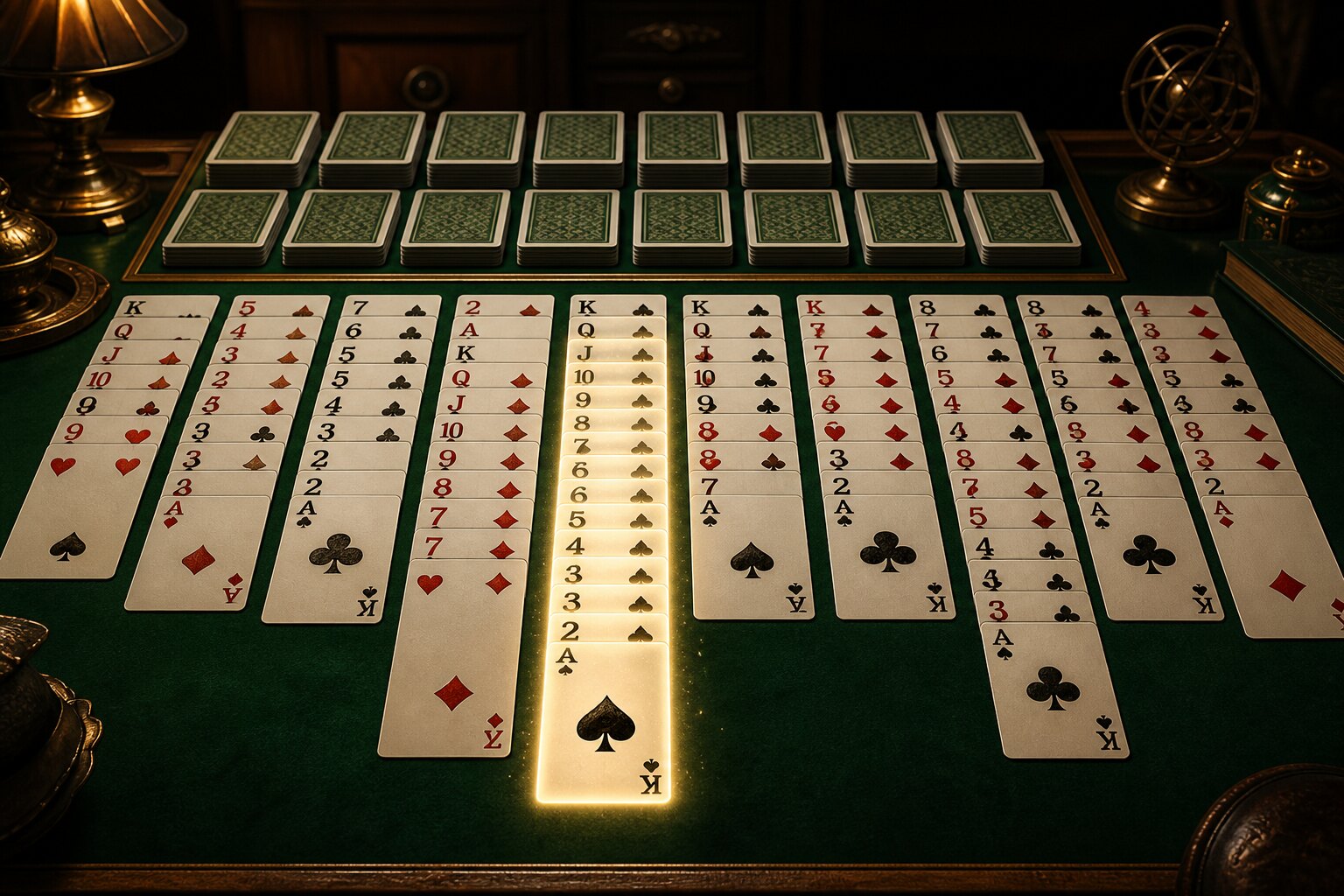
Ten columns, two decks, four suits and a stock that punishes you for dealing too early. It is the hardest solitaire most people ever try — and it rewards a plan.
How Solitaire Conquered the Office
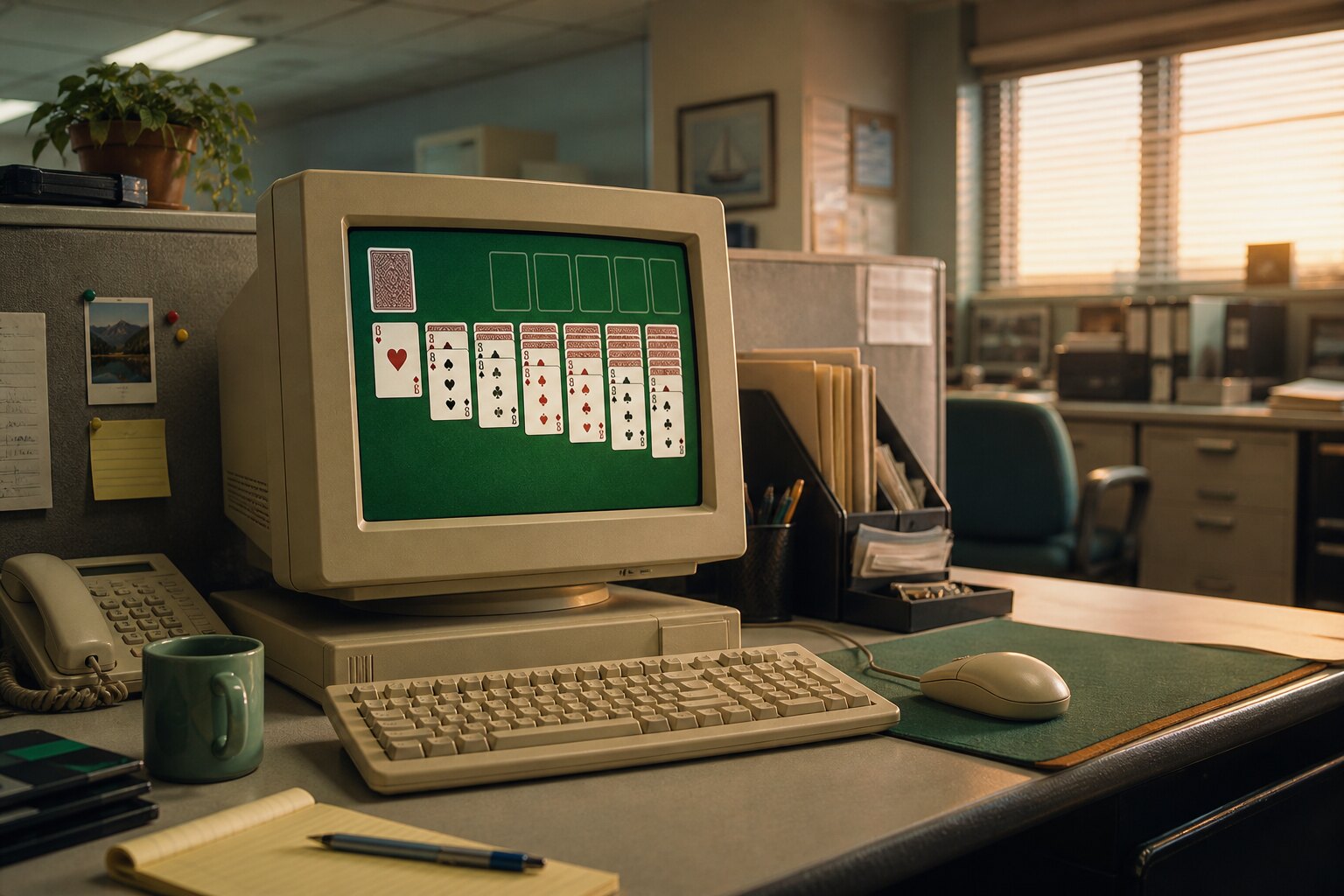
It was never meant to be a game. It was a mouse tutorial with a green baize disguise — and it ended up on more desks than any piece of software ever written.