 Solitaire
How to Play Yukon Solitaire: Rules and the Move That Defines It
Yukon looks like Klondike at a glance: seven columns, four foundations, build down in alternating colours. Then you discover there is no stock pile and that you can pick up almost anything, and it turns into a different game entirely.
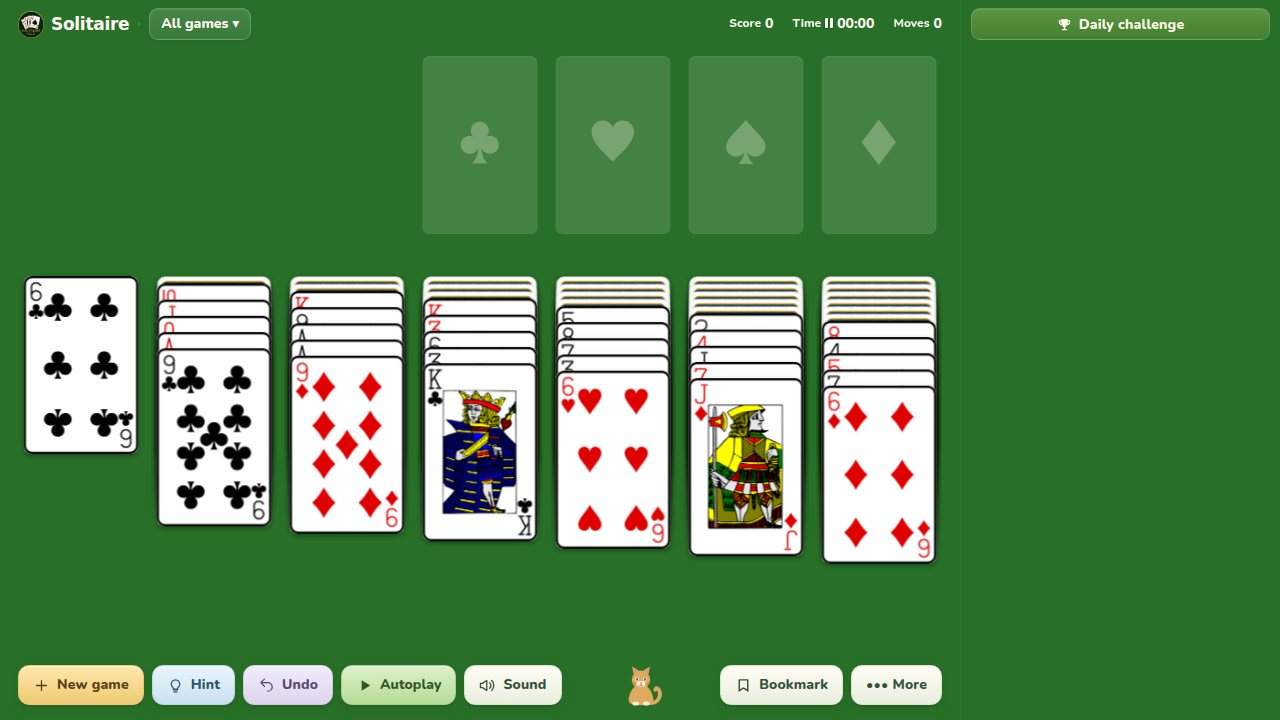
Watch the video guide
The board, explained
Yukon has two areas and nothing else. There is no stock, no waste and no button to press for a fresh card.
| Area | Where it is | What it holds |
|---|---|---|
| Tableau | Seven columns | All 52 cards. The first column holds one face-up card; each column after it holds a block of face-down cards topped by five face-up ones. |
| Foundations | Four spaces along the top | Empty at the start, filled Ace to King in suit. |
Twenty-one cards start face down and thirty-one start face up. Those 21 hidden cards are the entire puzzle, because everything else is already visible.
How you win
Build all four foundations from Ace to King, one suit each. All 52 cards home wins the deal.
The three legal moves
1. Build down the tableau, alternating colours
Exactly as in Klondike. A card lands on a card one rank higher of the opposite colour, so a red 6 goes on either black 7.
2. Move any face-up card, with everything on top of it
This is the rule people come to Yukon for, and it is covered properly in the next section.
3. Send cards up to the foundations
Aces first, then upward in suit. Only the top card of a column can go, and in this version a card on a foundation stays there, so think before you send a middle rank home.
An empty column takes only a King or a group headed by one. Yukon has no stock, so a King will not turn up later to bail you out. Check what you can actually put in a column before you clear it.
The move that defines Yukon
In Klondike you may only move a proper run: descending, alternating colours, no gaps. In Yukon you grab any face-up card you like and every card physically above it travels with it, in whatever state it happens to be in.
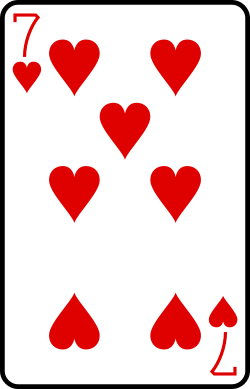
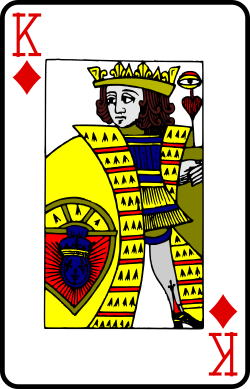
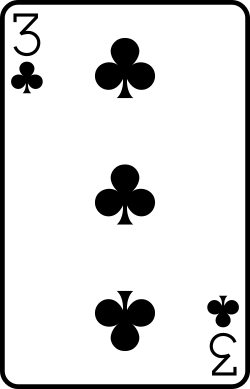
The practical effect is that a single legal landing spot can clear an enormous obstruction. In Klondike, a face-down card under a tangle of unordered cards is often simply stuck. In Yukon it is one move away, as long as the card at the bottom of the tangle has somewhere to go.
| Klondike | Yukon | |
|---|---|---|
| Stock pile | 24 cards to cycle | None |
| Cards face down | 21 | 21 |
| Group moves | Ordered runs only | Any group, ordered or not |
| What blocks you | Hidden cards and stock order | Hidden cards alone |
Your first game, step by step
- Read all 31 visible cards before moving. There is no stock, so what you see is most of what you get.
- Hunt for moves that expose a face-down card. Every flip is new information, and information is the only resource in this game.
- Do not be tidy. A move that drags four unrelated cards along is completely normal here. Judge a move by what it uncovers, not by how neat the result looks.
- Dig the long columns first. The seventh column hides six cards, the second hides one.
- Hold mid-rank cards back. A 7 on the board can still catch a 6. A 7 on a foundation cannot come back down.
Four mistakes beginners make
Playing it like Klondike
Waiting for a tidy run to appear wastes the game’s best feature. If the bottom card of a mess can land somewhere, move the mess.
Burying a card you were about to need
Dropping a five-card group on top of an exposed 4 hides that 4 behind five more cards. It is still recoverable, but only if the group’s bottom card has another home.
Clearing a column with no King in sight
There is no stock. If no King is visible and none is about to be uncovered, that empty column is dead space.
Rushing the foundations
Yukon rewards a full board. Cards sent home early stop being useful landing spots, and here they do not come back.
Frequently asked questions
How is Yukon different from Klondike?
Two changes. There is no stock pile, so every card is on the table from the first move, and you may pick up any face-up card together with every card sitting on top of it, whether or not they are in order. Only the card you grabbed has to land legally.
Do the cards I move have to be in sequence?
No, and that is the whole point of the game. The group can be any jumble at all. Klondike would refuse the move; Yukon carries the lot.
What goes on an empty column in Yukon?
Only a King, or a group with a King at the bottom. With no stock to deal from, an empty column you cannot fill is space you have lost for the rest of the deal.
Is Yukon harder than Klondike?
It is comparable in difficulty but fairer. With no stock cycle, far less of the outcome depends on the order cards happen to come off a pile, so more of the result is genuinely in your hands.